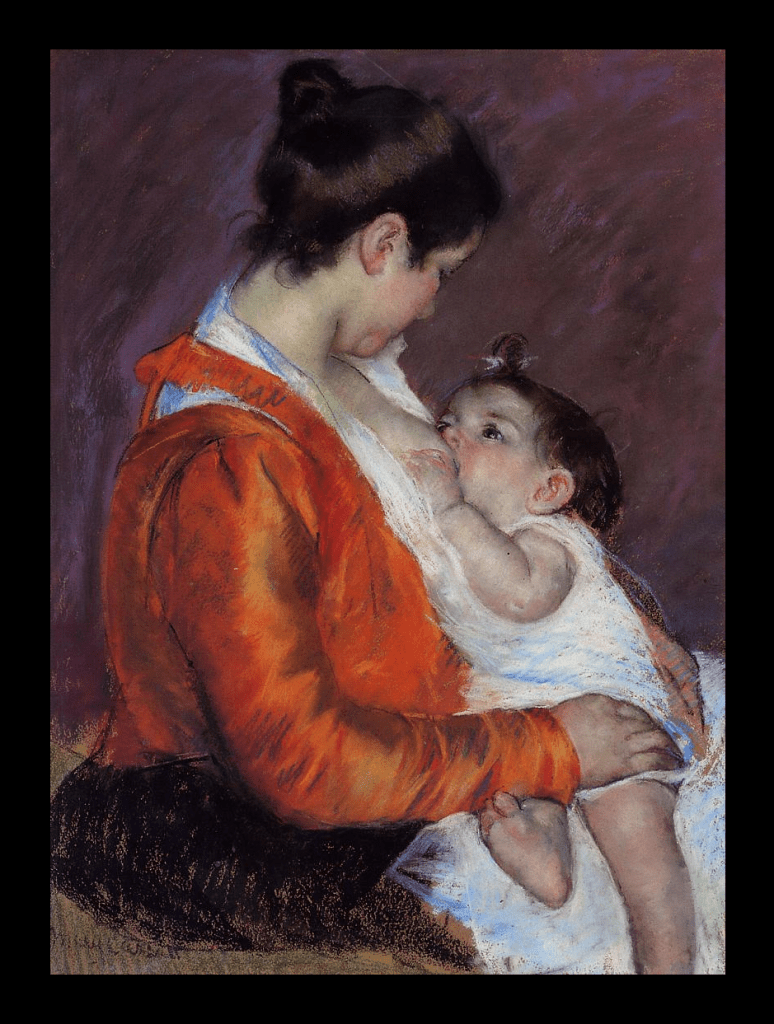
The best start to human life is at the mother’s breast.
Epicurean Roman philosopher and poet Lucretius saw breast feeding as a major drive among human and non human young: “…the young recognize their own mothers, and mothers their young; and we see that this is possible for them no less than for human beings… So the kids with their trembling voices recognize their horned mothers, and the playful lambs the bleating ewes; and thus, as nature demands, they all run to their own udders of milk.” (Book II, 349–370, De Rerum Natura (On the Nature of Things), approx 55 BCE)
Favorinus was a 2nd-century Roman-era philosopher and orator from Gaul who is quoted in Attic Nights book as saying: “The child’s own feelings of affection, fondness, and intimacy are centered wholly in the one by whom it is nursed …… ” (Favorinus as recorded by Aulus Gellius in Noctes Atticae (Book XII, Chapter 1, Section 21) : “…sola, unde alitur, occupatur et proinde, ut in expositis usu venit, matris, quae genuit, neque sensum ullum neque desiderium capit.“)
“If you wish to revolutionize society, …….. the first duty of a woman is to herself as a rational being, and the second as a mother, which includes the obligation to nurse her own offspring.” Mary Wollstonecraft, 1792 , A Vindication of the Rights of Woman
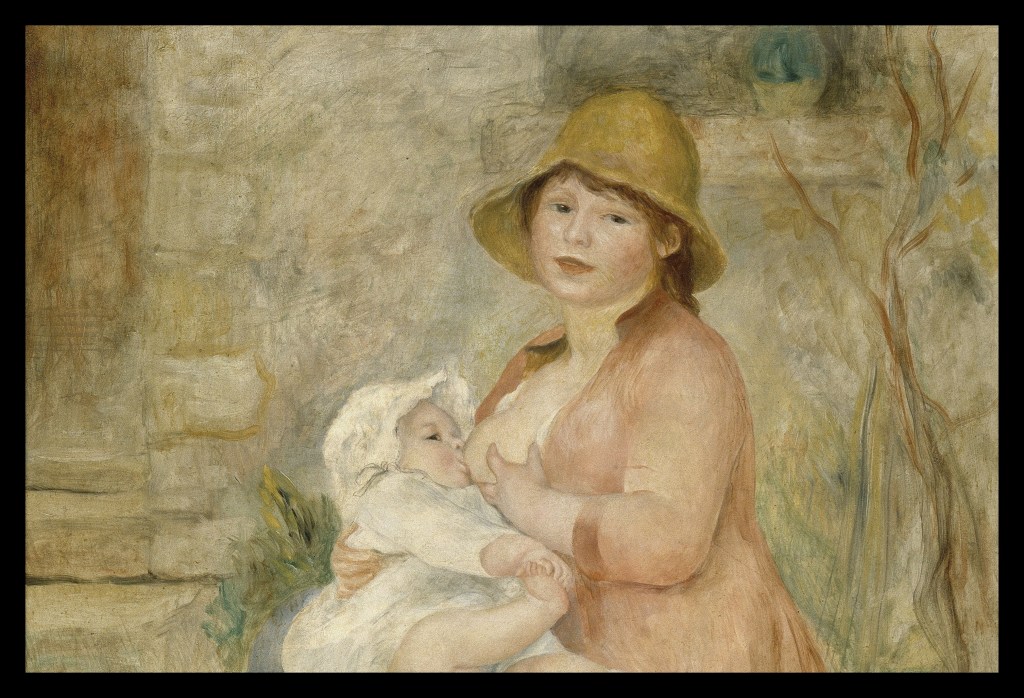
Renoir in “Maternity” in 1885:
In 1898 Mary Cassatt painted “Louise nursing Her Child” (shown above at the top).
Dorothea Lange’s 1936 photo of a migrant worker celebrates successful breast feeding under harsh conditions:
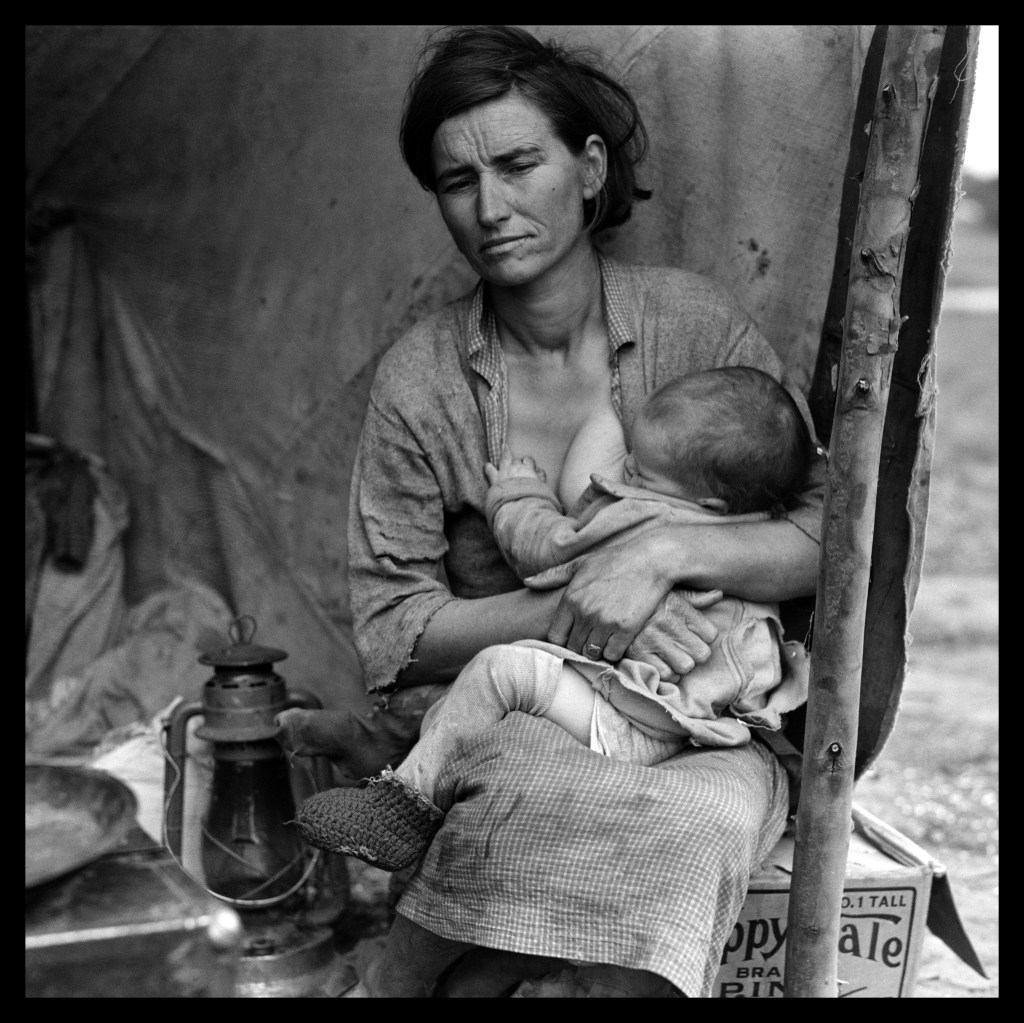
In 2012 the Dalai Lama wrote: “Mother’s milk is, I think, a symbol of compassion and human affection. Without mother’s milk we cannot survive, so our first act as a baby together with our mother is sucking milk from our mother, with a feeling of great closeness.”
I was a Registered Midwife for thirty years.
I never ceased to be amazed by the beauty of the newborn bay at the mother’s breast.
Geoff Fox, August 7, 2026, Melbourne, Australia


Leave a Reply